Durability
How long it lasts, how well it takes its next change, and whether its joints will still open when the time comes.

 long life, loose fit
The stage
Durability is the last stage and the longest. It asks whether the building is still useful, and still wanted, long after everyone who built it is gone.
What the usual way assumes
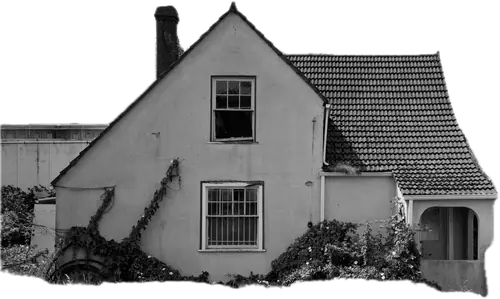
That thirty years is long enough. Houses in a growing city are rarely torn down because they are worn out. They come down because they can’t become what their land now allows.
What we do instead
Build for the weather we have. In a wet climate that means cladding with an air gap behind it, deep overhangs and careful flashing.
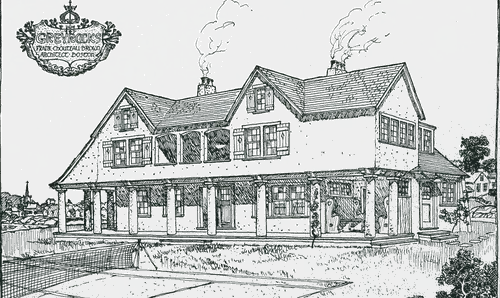
Build for the next change. An old rule from 1972 says it well: long life, loose fit.1 Structure and pipes are sized for a later floor or a split into two homes. Rooms aren’t tied to one use.
Plan for the day it comes apart. Fasteners are chosen for removal as well as installation: hex or square heads a wrench can still grip in sixty years, metals that won’t rust together, nothing in a drive pattern that may not exist by then.
A fastener you cannot buy a driver for in 2085 is a nail.
What we don’t know yet
Whether reversible joints stay reversible. Wood shrinks onto screws, paint fills the heads, metals seize. Nobody has sixty years of evidence on these details, including us.
Sources and notes
- Alex Gordon, president of the Royal Institute of British Architects, “Long life, loose fit, low energy,” 1972. ↩
Questions at this stage
Field Notes
AssemblyMaintenance
Five layers, five lifespans
A building is not one thing that ages at one speed. Keep its fast parts from being trapped behind its slow ones, and most demolition never has to happen.
MaintenanceDurability
Maintenance is a design decision
Buildings rarely wear out. They are neglected, or replaced piece by piece before their time. Both can be designed against, by a builder who stays.